Protect Your Water Supply with Professional Backflow Testing
Certified Backflow Testing in Northern Virginia | Advanced Irrigation
Protect your drinking water with certified backflow testing in Northern Virginia. Electronic report submission, fast scheduling, and reliable service.
Certified Backflow Testing in Northern Virginia
Protect Your Drinking Water with Professional Annual Backflow Testing
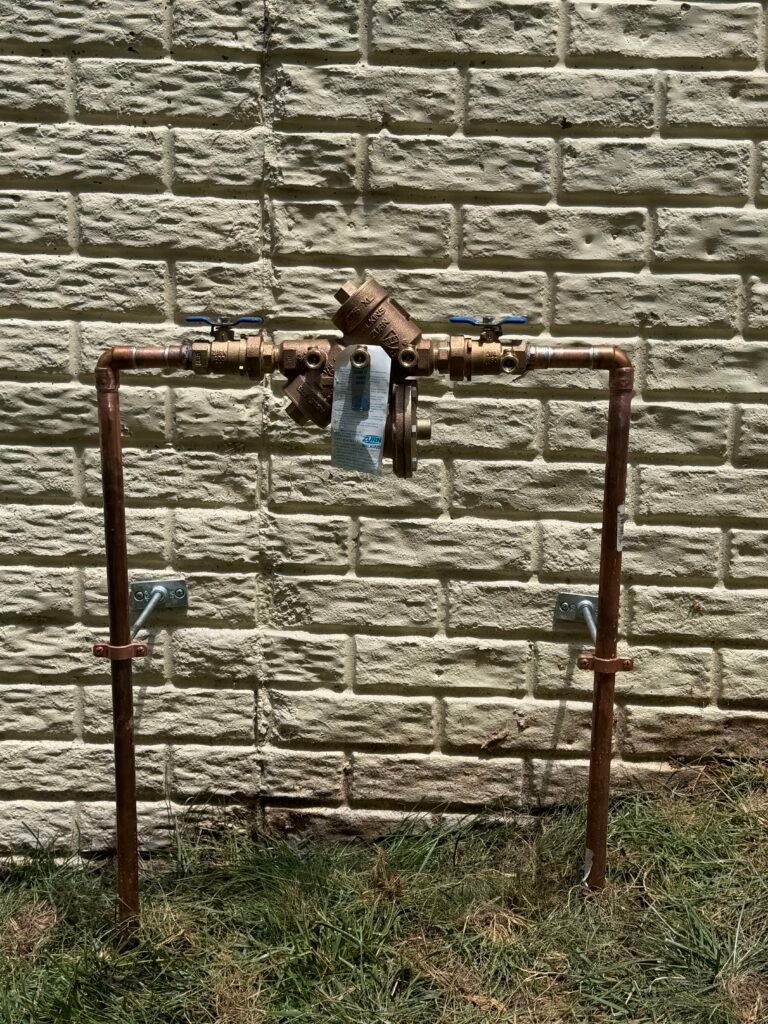
Your irrigation system is connected to your home’s drinking water supply. Without a properly functioning backflow prevention device, contaminated water from your irrigation system could potentially flow backward into the public water system during certain pressure changes. That’s why annual backflow testing is required in many jurisdictions throughout Northern Virginia. At Advanced Irrigation, we provide professional backflow testing performed by a Certified Backflow Prevention Device Worker (Certified Backflow Tester). We inspect your assembly, perform the required performance test using calibrated equipment, electronically submit the required reports when applicable, and provide clear recommendations if repairs are needed. Whether you’re a homeowner, HOA, commercial property owner, or property manager, our goal is simple: keep your backflow preventer operating correctly, help you remain compliant with local requirements, and protect the public drinking water supply.
We proudly provide certified backflow testing throughout:
- Fairfax County
- Loudoun County
- Prince William County
- City of Alexandria
- Arlington County
- Town of Herndon
Our Backflow Testing Services Include
Irrigation Backflow Experts
Annual Certified Backflow Testing
Commercial Backflow Testing
Electronic Report Submission
Residential Backflow Testing
Backflow Device Repairs
HOA & Property Management Services
Backflow Preventer Replacement
Freeze Damage Repairs
Retesting After Repairs
Annual Testing Reminders
Schedule Your Annual Backflow Test Today
Annual testing only takes approximately 15–25 minutes for most residential systems, but it provides year-round protection for your drinking water and helps ensure your irrigation system remains compliant with local regulations. Whether your device is due for its annual certification or you’ve received a notice from your water provider, Advanced Irrigation is ready to help with professional testing, electronic report submission, and honest recommendations backed by real field experience.
Call Advanced Irrigation today to schedule your certified backflow test.
Our Certified Backflow Testing Process
Our Professional Backflow Testing Process
At Advanced Irrigation, every backflow test follows a systematic procedure to ensure your backflow prevention assembly is operating correctly and complies with local testing requirements. Although most residential tests take only 15 to 25 minutes, several important steps are completed during every appointment. Our goal is not simply to pass or fail a device, but to verify that your backflow preventer is functioning properly and protecting your drinking water. Here’s what you can expect when we arrive.
Step 1 – Inspect the Backflow Assembly
Every appointment begins with a visual inspection of the backflow preventer. Before connecting our testing equipment, we carefully examine the assembly for any obvious issues that could affect its performance or indicate that repairs may be needed. During this inspection, we look for:
• Visible water leaks
• Cracked or damaged components
• Corrosion
• Signs of previous repairs
• Freeze damage
• Missing parts
• Proper orientation of the assembly
• Accessibility for safe testing
Many problems can be identified during this initial inspection before the performance test even begins. If we notice anything unusual, we’ll explain our findings and answer any questions before moving forward.
Step 2 – Perform the Certified Performance Test
Once the visual inspection is complete, we connect our calibrated backflow test gauge to the assembly.
Using specialized equipment, we measure how the internal components of the backflow preventer perform under specific test conditions.
Unlike a simple visual inspection, this test verifies that the internal safety mechanisms are working correctly.
During testing, we evaluate the performance of critical components such as:
• Internal check valves
• Relief valve (on RPZ assemblies)
• Springs
• Sealing surfaces
• Pressure differentials
• Missing parts
• Overall operating performance
These components work together to prevent contaminated water from flowing backward into the potable water system.
Because many of these parts are located inside the assembly, they cannot be evaluated by sight alone. Specialized testing equipment is required to confirm the device is operating within the required standards.
Step 3 – Record the Test Results
Every certified backflow test requires detailed documentation. Once testing is complete, we record all required information, including:
• Property information
• Device manufacturer
• Model number
• Serial number
• Device size
• Test readings
• Pass or fail results
• Testing date
• Certification information
Accurate documentation is an important part of the testing process and helps ensure compliance with local jurisdiction requirements.
Step 4 – Electronically Submit the Required Report
After completing the test, we electronically submit the required report when applicable for your local jurisdiction.
This report includes the information collected during the inspection and performance test, along with our certification as the testing professional.
In many cases, your email address is included with the submission so you also receive a copy of the completed report for your records.
This gives homeowners documentation showing that the required annual testing has been completed.
Step 5 – If Your Device Passes
If your backflow preventer passes the performance test, that’s great news.
It means the assembly is operating properly and continues to provide the protection it was designed for.
Once the report has been submitted, your annual testing requirement for that inspection cycle is complete.
We recommend continuing annual testing so the device can be monitored as it ages and continues protecting your irrigation system and drinking water supply.
Step 6 – If Your Device Does Not Pass
Not every failed backflow test means the entire assembly needs to be replaced. In many cases, the problem is caused by normal wear of internal components such as springs, rubber seals, or check valves. Mineral buildup, debris inside the assembly, or damage from freezing temperatures can also affect performance. If your device does not pass the inspection, we will explain exactly what caused the failure and discuss the available repair options. Unlike some companies that make immediate repair recommendations without explanation, we believe homeowners should understand what needs to be repaired and why.
Step 7 – Repair Recommendations and Customer Approval
If repairs are necessary, we typically do not complete them during the same appointment.
Most repairs require replacement parts that are specific to the manufacturer and model of your backflow assembly. To ensure the correct components are installed, we first identify the required parts and prepare a detailed repair estimate.
You’ll receive a clear quote outlining the recommended repairs. Once you’ve had an opportunity to review and approve the estimate, we’ll schedule a return visit to complete the work.
This process allows you to make an informed decision without feeling pressured and ensures the correct replacement parts are used for your specific assembly.
Step 8 – Retesting After Repairs
After repairs have been completed, the assembly must be tested again.
This final test confirms that the repaired backflow preventer now meets the required performance standards and is functioning correctly.
Once the device passes the retest, we submit the updated certification electronically, completing the process and helping ensure your property remains compliant with local requirements.
Pro Tip : (Failures & Repairs
Don’t ignore a leaking relief valve. While some leaks are minor, continuous discharge often indicates the assembly should be inspected by a certified backflow tester.
Why Homeowners Appreciate Our Process
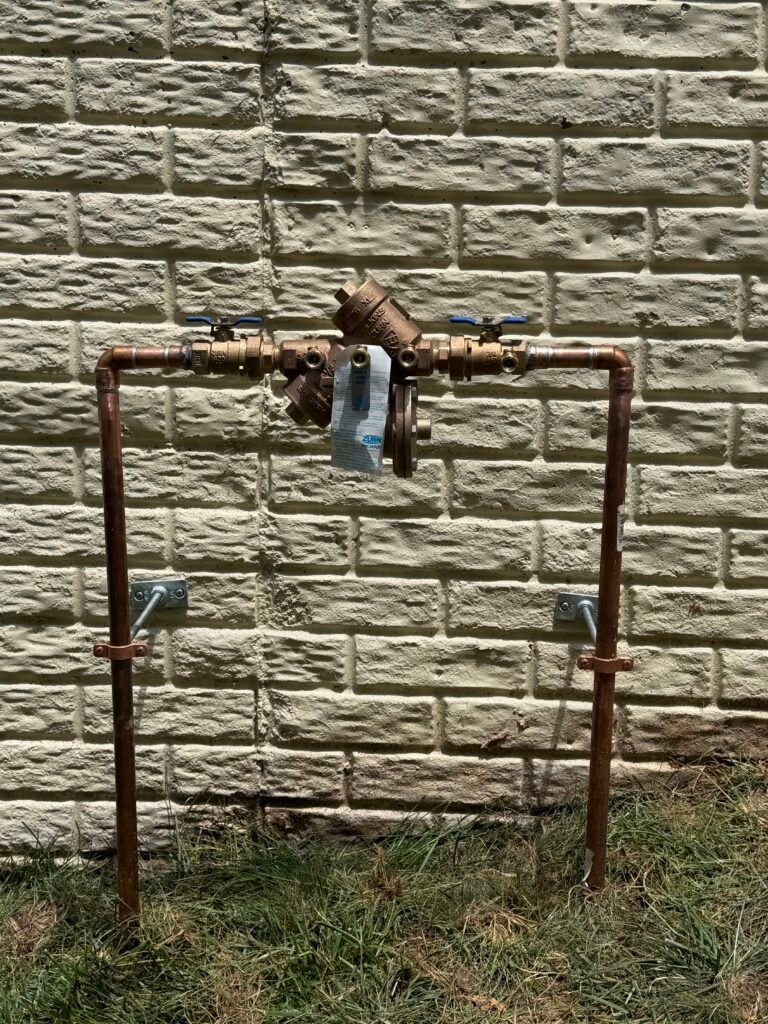
We believe homeowners deserve more than a pass or fail result. Our goal is to explain the condition of your backflow preventer, answer your questions honestly, and provide recommendations based on what your assembly actually needs—not on unnecessary repairs or replacements. Whether your device passes on the first visit or requires repairs, you’ll always know what we’re doing, why we’re doing it, and what to expect next.
Did You Know?
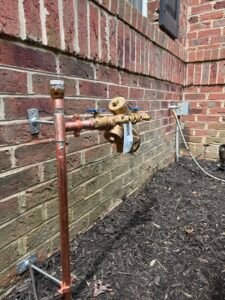
A backflow preventer is one of the few plumbing devices specifically designed to protect not only your home, but also the public drinking water system that serves your entire neighborhood.
Why Backflow Devices Fail & What Happens Next
Why Do Backflow Preventers Fail?
Like any mechanical device, a backflow preventer experiences normal wear over time. Although these assemblies are built to last for many years, they contain moving parts, springs, rubber seals, and check valves that are constantly exposed to water pressure, minerals, and environmental conditions.
A failed annual test doesn’t necessarily mean the assembly was poorly installed or neglected. In many cases, it simply means one or more internal components have reached the end of their service life and need to be repaired or replaced.
The purpose of annual testing is to identify these issues before the assembly can no longer provide the level of protection it was designed for.
The Most Common Reasons Backflow Devices Fail
1. Normal Wear and Tear
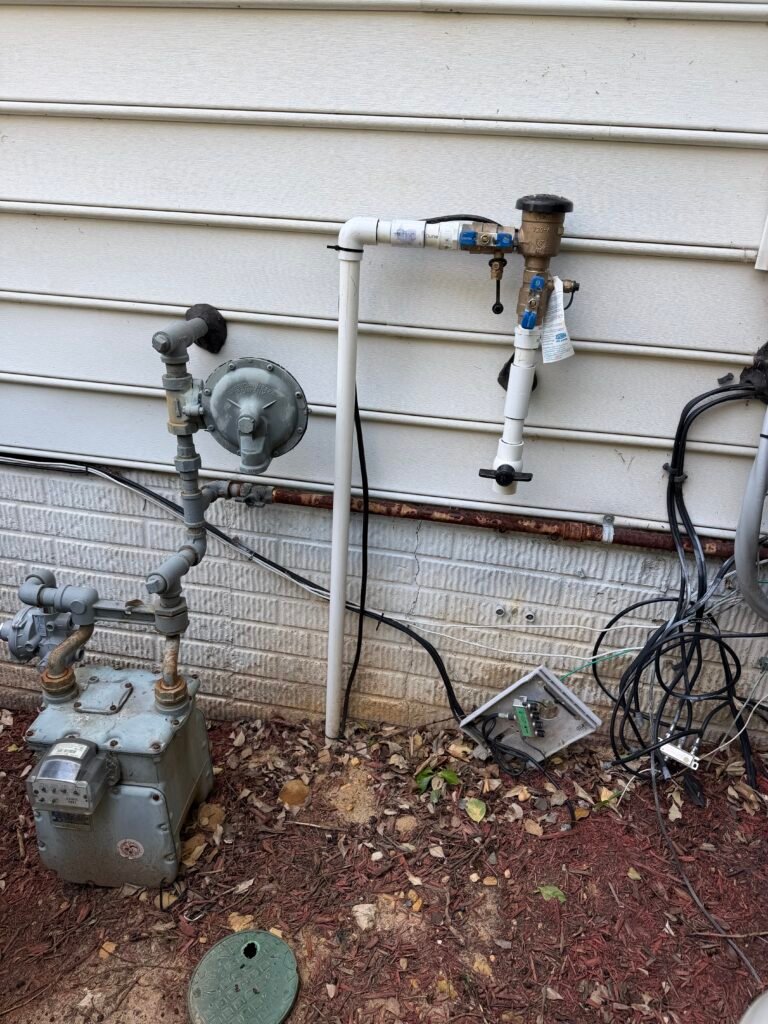
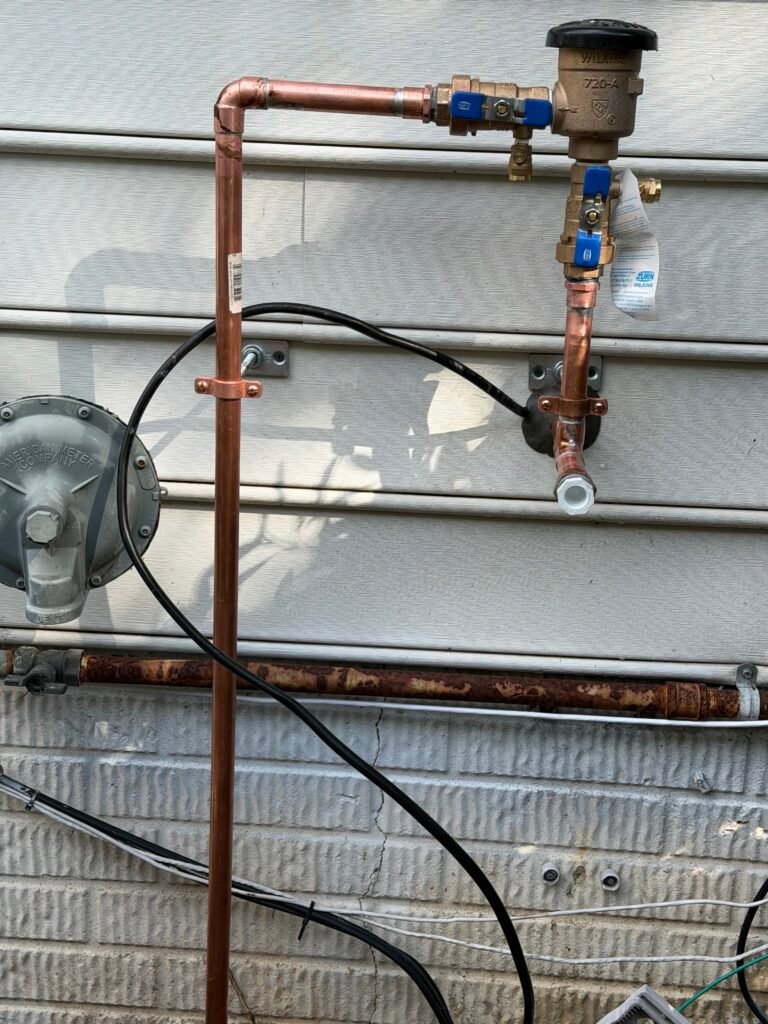
The most common cause of failure is simply age. Over time, the internal springs lose tension, rubber seals become brittle, and moving components no longer seal as tightly as they did when the assembly was new. These changes happen gradually and are often impossible to notice without certified testing.
2. Mineral Buildup
Northern Virginia’s water naturally contains minerals that can accumulate inside a backflow assembly over the years.
Calcium deposits may interfere with the movement of internal check valves or prevent sealing surfaces from closing completely. Even a small amount of buildup can affect the assembly’s ability to perform correctly during testing.
3. Debris Inside the Assembly
Small rocks, sand, rust particles, or other debris can occasionally enter the backflow preventer through the water supply.
When debris becomes trapped between sealing surfaces, the internal check valves may not close completely. This is one of the reasons why a device that appeared to be working normally can still fail its annual certification.
4. Freeze Damage
One of the most serious causes of failure is freezing temperatures. If water remains inside the assembly during winter and freezes, it expands with tremendous force. This can damage internal components or even crack the body of the backflow preventer. In some cases, freeze damage is immediately visible. In others, the damage may not become apparent until the annual performance test. Proper winterization is one of the best ways to protect your investment and extend the life of your backflow preventer.
5. Internal Component Failure
Even when the outside of the assembly looks perfect, important internal parts can wear out over time. Components that commonly require replacement include:
• Springs
• Rubber Seals
• Check valve assemblies
• O-rings
• Relief valve components (on RPZ assemblies)
These parts are designed to be serviceable, which means many backflow preventers can be repaired rather than replaced.
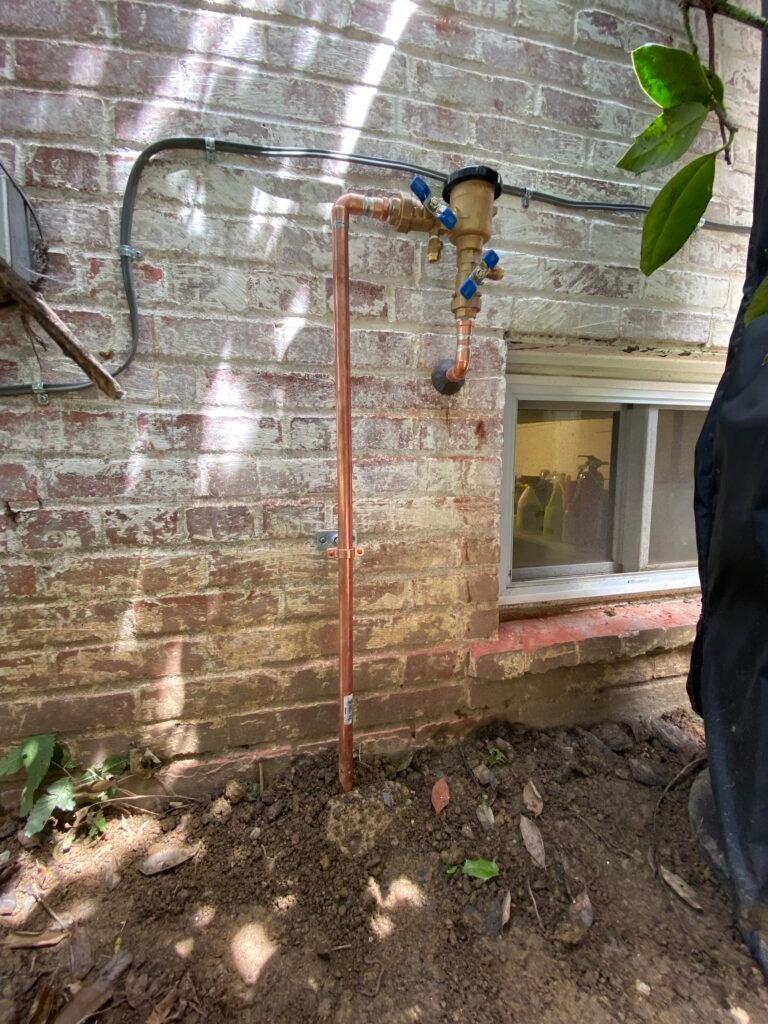
What Happens If Your Backflow Preventer Fails?
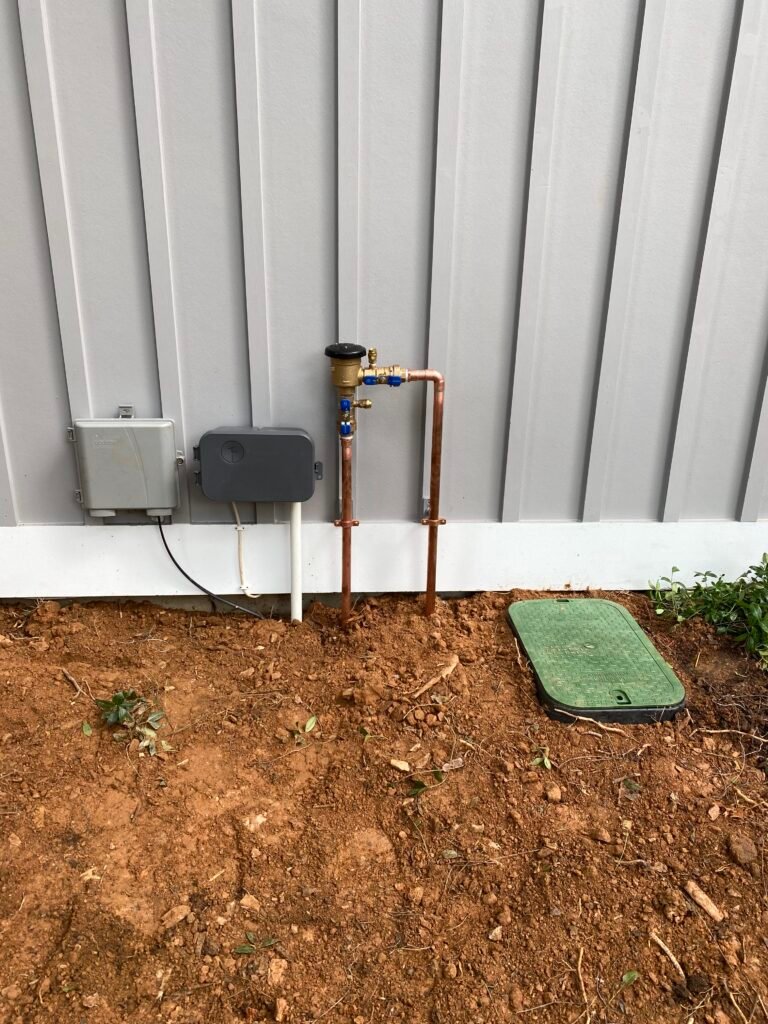
Receiving a failed test result can be concerning, but it doesn’t automatically mean you’ll need an entirely new backflow preventer. In many cases, the assembly can be successfully repaired by replacing worn internal components and then retesting the device. Our first priority is always to determine the most practical and cost-effective solution for your specific assembly. We Explain the Results If your device doesn’t pass the performance test, we’ll clearly explain:
• Which part of the assembly failed
• Why it failed.
• Whether the issue is repairable.
• If replacement parts are available
• Whether repair or replacement is the better long-term option.
We believe homeowners deserve clear explanations, not confusing technical language or pressure to make an immediate decision.
Why Repairs Usually Require a Second Visit
Many homeowners ask why repairs aren’t always completed during the same appointment. The answer is simple—we want to repair your assembly correctly.
Backflow preventers are manufactured by different companies, such as Wilkins, Watts, and Apollo, and each model may require different internal repair kits or replacement components. Rather than installing incorrect or universal parts, we obtain the proper components designed specifically for your assembly.
Once the parts are available and you’ve approved the estimate, we’ll schedule a return visit to complete the repairs. This approach helps ensure a reliable repair and reduces the chance of future issues.
Every Repair Is Followed by Another Certified Test
Repairing a backflow preventer is only part of the process.
After the repairs are complete, the assembly must be tested again using certified testing equipment to verify that it now meets all required performance standards.
Only after passing this final test can the updated certification be submitted electronically to the appropriate jurisdiction.
This final step confirms that your backflow preventer is once again providing the protection it was designed to deliver.
Did You Know?
Many backflow preventers remain in service for years because their internal components can often be rebuilt. Replacing worn springs, seals, and other serviceable parts can restore the assembly’s performance without replacing the entire device—provided the body of the assembly is still in good condition.
Our Philosophy: Repair When It Makes Sense, Replace When It’s Necessary
At Advanced Irrigation, we don’t believe every failed test should result in a new backflow preventer. Whenever it’s safe, practical, and cost-effective, we’ll recommend repairing your existing assembly. If the device has suffered extensive damage, severe corrosion, or freeze-related cracking, we’ll explain why replacement is the better long-term investment. Our goal is to provide honest recommendations based on the actual condition of your backflow preventer—not unnecessary repairs or replacements. Whether your device needs a simple rebuild or a complete replacement, you’ll receive professional guidance, transparent communication, and quality workmanship every step of the way.
Types of Backflow Preventers We Test
Not every irrigation system uses the same type of backflow prevention assembly. The type of device installed depends on factors such as local plumbing codes, the level of hazard associated with the irrigation system, and the property’s specific requirements. At Advanced Irrigation, we perform certified testing on many of the most common backflow prevention assemblies found throughout Northern Virginia. Whether your device is protecting a residential lawn irrigation system or a commercial property, we have the knowledge and equipment to test it accurately.
Reduced Pressure Zone (RPZ) Assemblies
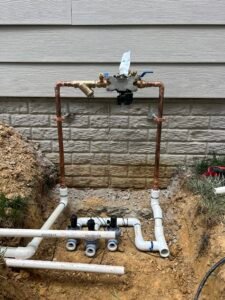
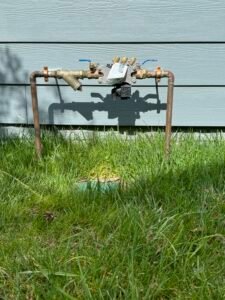
The Reduced Pressure Zone Assembly (RPZ) is one of the highest levels of protection used for irrigation systems. An RPZ contains two independently operating check valves separated by a pressure-monitored relief valve. If either check valve does not seal properly or pressure conditions change unexpectedly, the relief valve opens to discharge water rather than allowing contaminated water to flow backward into the drinking water system. Because of this design, RPZ assemblies provide excellent protection against both backpressure and back siphonage conditions. These assemblies are commonly installed on:
• Residential irrigation systems
• Commercial irrigation systems
• HOA common areas
• Schools
• Office buildings
• Medical facilities
• Industrial properties
Due to their complexity, RPZ assemblies require annual testing by a Certified Backflow Prevention Device Worker (Certified Backflow Tester).
Double Check Valve Assemblies (DCVA)
A Double Check Valve Assembly uses two independently operating check valves to prevent water from flowing backward into the potable water supply. Unlike an RPZ, a Double Check Assembly does not include a relief valve. Instead, protection is provided by the two internal check valves working together to stop reverse flow.
These assemblies are commonly installed where the degree of potential contamination is considered lower than systems requiring an RPZ. Although the design is simpler, annual certified testing is still necessary to verify that both internal check valves continue operating correctly.
Pressure Vacuum Breakers (PVB)
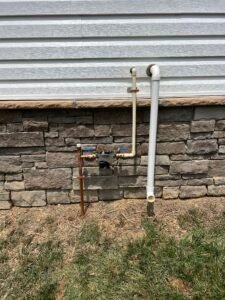
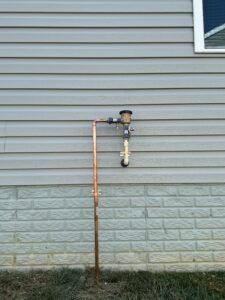
Pressure Vacuum Breakers are another common type of backflow prevention device used on irrigation systems. These assemblies are designed primarily to protect against back siphonage, which occurs when negative pressure develops in the public water system and attempts to draw water backward through the irrigation system.
A PVB contains:
• An air inlet valve
• A check valve
• Test cocks
• Shutoff valves
When operating correctly, the air inlet opens during a pressure loss, preventing contaminated water from being siphoned into the potable water supply. Like other backflow prevention devices, Pressure Vacuum Breakers require annual testing to verify proper operation.
Spill-Resistant Vacuum Breakers (SVB)
Some irrigation systems use a Spill-Resistant Vacuum Breaker. An SVB performs a similar function to a standard vacuum breaker while reducing water
discharge during operation. Although these assemblies are less common, they still require periodic inspection and testing to ensure continued protection.
Common Manufacturers We Service
Our certified testing services include many of the industry’s most trusted manufacturers. Some of the brands we commonly work with include:
• Wilkins
• Watts
• Apollo
Regardless of the manufacturer, every backflow preventer is tested according to accepted testing procedures using calibrated testing equipment.
Pro Tip from Our Certified Backflow Tester
The manufacturer of your backflow preventer doesn’t determine whether it passes or fails its annual test. Even high-quality assemblies from trusted brands like Wilkins, Watts, and Apollo require routine testing because all mechanical components experience normal wear over time.
Does the Manufacturer Matter?
Homeowners often ask if one manufacturer is “better” than another. The truth is that manufacturers like Wilkins, Watts, and Apollo all produce reliable backflow
prevention assemblies when properly installed and maintained. The most important factor isn’t necessarily the brand—it’s ensuring the device is:
• Installed correctly.
• Protected from freeze damage.
• Tested every year.
• Repaired when necessary.
• Maintained by qualified professionals.
A properly maintained backflow preventer can provide reliable protection for many years.
Why Professional Testing Is Important
Although backflow preventers may look similar from the outside, each manufacturer and model has its own design, internal components, and repair kits.
Testing these assemblies requires more than simply attaching a gauge. A certified tester must understand how each device operates, interpret the test results correctly, and determine whether the assembly meets the required performance standards. That’s why hiring a Certified Backflow Prevention Device Worker (Certified Backflow Tester) is so important. Proper testing helps ensure your device continues protecting your drinking water and that the required documentation is completed accurately.
Did You Know?
Two backflow preventers can look nearly identical from the outside but contain different internal components and require different repair kits. That’s one reason repairs are often scheduled for a second visit—using the correct parts for your specific assembly is essential to restoring proper operation.
Electronic Report Submission & County Compliance
Annual Backflow Testing and Local Compliance
Many homeowners first learn about backflow testing after receiving a reminder or notice from their local water authority. It’s common to have questions about why the test is required, who performs it, and what happens once the testing is complete.
At Advanced Irrigation, we help make the process as straightforward as possible. After your certified backflow test is completed, we electronically submit the required
information to the appropriate jurisdiction when applicable. We also provide clear communication throughout the process so you understand what has been completed and what to expect next. Our goal is to help homeowners stay compliant with local requirements while making the annual testing process simple and stress-free.
We Provide Electronic Report Submission
After successfully completing your certified backflow test, we prepare and electronically submit the required report for your jurisdiction.
The report typically includes important information such as:
• Property address
• Customer information
• Backflow preventer manufacturer
• Model number
• Serial number
• Device size
• Test results
• Pass or fail status
• Testing date
• Tester certification information
Accurate reporting is just as important as the testing itself. Complete documentation helps ensure the proper records are maintained and confirms that your annual testing requirement has been fulfilled.
You’ll Receive a Copy of Your Test Report
For many jurisdictions, your email address is included as part of the electronic submission process. This allows you to receive a copy of the completed report for your personal records. Keeping a copy of your annual test report can be helpful if you ever need to verify that testing was completed or review information about your backflow assembly in the future.
Pro Tip from Our Certified Backflow Tester
Save your annual backflow test report in a safe place. It contains valuable information about your assembly—including the manufacturer, model number, serial number, and testing history—which can be helpful if repairs or replacement are ever needed.
What If My Device Doesn’t Pass?
If your backflow preventer does not pass its annual performance test, don’t panic.
A failed test does not automatically mean you’ve done something wrong or that the entire
assembly must be replaced.
Many failures are caused by normal wear of serviceable components that can often be repaired.
If repairs are recommended, we’ll explain:
• Why the device failed
• Which components require attention
• Whether repair is possible
• Whether replacement is the better long-term solution
Once repairs are completed, the assembly is tested again before the updated certification is
submitted.
This ensures the device is operating correctly before the testing process is finalized.
Jurisdictions We Commonly Serve
Advanced Irrigation proudly provides certified backflow testing and electronic report submission for customers throughout Northern Virginia, including:
Fairfax County
Homeowners in Fairfax County are required to have applicable backflow prevention assemblies tested annually by a Certified Backflow Prevention Device Worker. After completing the test, we electronically submit the required report to Fairfax County when applicable, helping you stay in compliance without the hassle of paperwork. If your assembly requires repairs before it can pass certification, we’ll explain the results, provide a detailed estimate, complete the repairs upon approval, and perform the required retest before submitting the updated report.
Loudoun County
If you own a home with an irrigation system in Loudoun County, you may receive an annual reminder to have your backflow preventer tested. We perform the certified test, complete the required documentation, and electronically submit your report when applicable. Whether your device passes on the first visit or needs repairs, we’ll guide you through the entire process and answer any questions along the way.
Prince William County
Our certified testing services help homeowners and businesses throughout Prince William County meet their annual backflow testing requirements. We accurately document the results, electronically submit the required paperwork, and provide a copy of the completed report for your records whenever available.
Should your assembly fail its certification, we’ll explain why, recommend the most appropriate solution, and retest the device after repairs are completed.
City of Alexandria
The City of Alexandria requires annual testing of applicable backflow prevention assemblies to help protect the public drinking water supply. We provide certified testing, electronic report submission when applicable, and clear communication from start to finish. Our goal is to make the process simple, efficient, and easy to understand so you can have confidence that your system is compliant.
Arlington County
We proudly provide certified backflow testing for residential and commercial irrigation systems throughout Arlington County. After testing your assembly, we prepare the required documentation and submit it electronically when required. If repairs are needed, we’ll explain your options and complete a certified retest before the final report is submitted.
Town of Herndon
Property owners in the Town of Herndon can rely on Advanced Irrigation for professional backflow testing, honest recommendations, and accurate reporting. We take care of the testing, documentation, and electronic submission process, allowing you to focus on your home while we handle the compliance requirements.
Pro Tip from Our Certified Backflow Tester
Receiving a reminder letter doesn’t necessarily mean something is wrong with your backflow preventer. In most cases, it’s simply a notification that it’s time for your annual certification to ensure your assembly continues protecting the public water supply.
Why Choose Advanced Irrigation for Backflow Testing?
Protecting Your Water Supply Starts with Choosing the Right Professional
Backflow testing isn’t just another maintenance service—it’s an important part of protecting your home’s drinking water and helping keep the public water system safe. When you hire someone to test your backflow preventer, you’re trusting them to evaluate a critical safety device, complete accurate documentation, and guide you through the process if repairs are needed. At Advanced Irrigation, we take that responsibility seriously. Our goal isn’t simply to complete another inspection. It’s to provide professional service, honest recommendations, and a straightforward experience from the moment you schedule your appointment until your testing requirements are complete.
Certified to Perform Backflow Testing
Backflow testing requires specialized training, certification, and calibrated testing equipment. As a Certified Backflow Prevention Device Worker (Certified Backflow Tester), we follow accepted testing procedures and accurately evaluate your backflow prevention assembly to verify it is operating as intended. Whether your system protects a single-family home, a commercial property, or an HOA irrigation system, every test is performed with attention to detail and professionalism.
We Believe Homeowners Should Understand the Process
One of the most common concerns we hear is:
“What happens if my backflow preventer fails?”
Rather than using technical terms or creating unnecessary concern, we take the time to explain:
• What was tested.
• What the results mean.
• Why the assembly passed or failed.
• Whether repairs are recommended.
• What happens next.
We believe informed homeowners make better decisions, which is why we focus on education as
much as the testing itself.
Pro Tip from Our Certified Backflow Tester
If someone tells you that your backflow preventer needs to be replaced, don’t hesitate to ask why. In many cases, worn internal components can be repaired, allowing the assembly to continue providing reliable protection for years. A trustworthy tester should be able to explain the results and the reasoning behind their recommendation.
Honest Recommendations—Not Unnecessary Replacements
A failed backflow test doesn’t automatically mean you need a new assembly. Whenever it’s practical and cost-effective, we’ll recommend repairing your existing backflow
preventer rather than replacing it. If replacement is the better option because of freeze damage, severe corrosion, or a cracked body, we’ll explain exactly why and answer any questions you have before work begins. Our recommendations are based on the condition of your assembly—not on selling the most expensive solution.
Professional Communication from Start to Finish
We understand that homeowners value clear communication just as much as quality workmanship. From scheduling your appointment to submitting your completed report, we keep you informed throughout the process. If repairs are needed, you’ll receive a detailed explanation and estimate before any work is performed, giving you the opportunity to make an informed decision without pressure.
Respect for Your Time
We know your schedule is important. Most residential backflow tests are completed in approximately 15 to 25 minutes, provided the assembly is accessible and no repairs are required. Our goal is to work efficiently while maintaining the accuracy and attention to detail that certified testing demands.
Serving Northern Virginia with Pride
Advanced Irrigation proudly provides certified backflow testing for homeowners, businesses, and property managers throughout Northern Virginia. Whether you’re scheduling your first annual certification or have maintained your irrigation system for years, you can expect the same level of professionalism, honesty, and attention to detail on every visit. Our reputation is built one customer at a time, and we appreciate every opportunity to earn your trust.
Why Homeowners Continue to Choose Advanced Irrigation
When you work with us, you can expect:
Certified Backflow Prevention Device Worker
Professional testing using calibrated equipment
Electronic report submission when applicable
Honest repair recommendations
Clear explanations without confusing technical jargon
Transparent pricing with no surprise charges
Respect for your property and your time
Friendly, professional customer service
Accurate documentation and reporting
Commitment to protecting your drinking water
Did You Know?
Choosing a qualified tester isn’t just about passing the annual certification. A knowledgeable professional can identify developing issues early, helping you avoid unexpected failures, costly emergency repairs, and unnecessary replacement of your backflow assembly.
What Our Clients Say
Homeowners across Northern Virginia trust us for professional backflow testing, reliable scheduling, and detail-oriented service. Our certified technicians ensure your device is properly tested, compliant with local requirements, and operating safely to help protect your water supply and irrigation system year-round.
Posted on Google
 Battaglia B
Trustindex verifies that the original source of the review is Google.
Great service from Advanced Irrigation! Carlos is responsive and very knowledgeable. He installed a new app-controlled irrigation controller and repaired our sprinkler heads. We’re very pleased with the results and highly recommend them!Posted on Google Steven WAdvanced Irrigation & Lighting Services LLC I cannot say enough great things about Advanced Irrigation & Lighting Services LLC. From day one, their professionalism, expertise, and attention to detail have been exceptional. They have completely taken the stress out of maintaining my irrigation system. Whether it's seasonal adjustments, repairs, or ensuring every zone is operating efficiently, their team is always knowledgeable, responsive, and reliable. They consistently go above and beyond to make sure everything is working perfectly. Their outdoor lighting work has been equally impressive. The lighting they installed has transformed my yard, highlighting the landscape beautifully while adding elegance, warmth, and security to my property. The quality of their workmanship is top-notch, and the results exceeded my expectations. What truly sets them apart is their commitment to customer satisfaction. They show up when they say they will, communicate clearly, and treat your property as if it were their own. It's rare to find a company that combines technical expertise with such outstanding customer service. If you're looking for a company you can trust for irrigation and landscape lighting, look no further than Advanced Irrigation & Lighting Services LLC. They have earned my highest recommendation, and I will continue to use them for all my irrigation and lighting needs. Five stars all the way! Highly recommended! ⭐⭐Posted on Google
 Blake BWe’ve been using Advanced for a couple years now for our irrigation and low voltage lighting systems and have been happy with them. They are prompt, professional, knowledgeable, and reliable.Posted on Google
 Boyd SI very much appreciate the service that you provide. You have been very helpful in moving the sprinkler heads around a bit - and no charge!Posted on Google
 Michael KI’ve used several irrigation companies over the years. My last company was great at first, but after a change in ownership, the service went downhill quickly. After doing some research, I found Advanced Irrigation—and I’m glad I did. Carlos, the owner, was responsive to my call and took the time to answer my questions. I had contacted several companies about winterizing my system, and his personal attention made the decision easy. Before my winter service, another issue came up, and Carlos came out to take care of it. After resolving that problem, he said, “You know, I didn’t like what I heard when I was shutting off the system at the street.” That observation led him to discover a small hole in a sprinkler pipe, apparently caused by the aeration work done the week before. The previous irrigation company had installed that pipe barely below the surface while connecting a new backflow preventer on the side of the house. Carlos repaired the puncture, waited for the glue to dry, and tested both the repair and my entire system. I was impressed. How many people would take that extra step simply because they heard something that didn’t sound right? I’m signing up for his annual service, which includes winterization, spring startup, a summer inspection, and backflow testing. Carlos is knowledgeable, thorough, and willing to go above and beyond. If you’re looking for personal service from someone who knows his business and pays attention to the details, I highly recommend Advanced Irrigation.Posted on Google
 Gary HAdvanced Irrigation are great. They come as promised and are very thorough when they turn on and turn off your sprinkler system. I had a broken sprinkler head, I called for the repair and they were here the next day. Great customer service.Posted on Google
 Rodica UGreat, great, great in everything they do.Posted on Google
 Alisia KAdvanced Irrigation has been a complete life saver! We inherited the system when we purchased our house and the service, attention to detail and response times (we've had a few leaks and breaks in the system over the years) are UNREAL. Carlos is the literal BEST!!!!Posted on Google
 Andy GI would give them 10 stars if I could as Advanced Irrigation did an amazing job installing my new system. The county inspector even commented on the high quality of the completed work.Posted on Google
 Kurt GAfter several bad companies, we appear to have found a good one. The only item for improvement was that the invoice can via text and looked like spam because it did not have their company name.Verified by TrustindexTrustindex verified badge is the Universal Symbol of Trust. Only the greatest companies can get the verified badge who has a review score above 4.5, based on customer reviews over the past 12 months. Read more
Ready to Schedule Your Annual Backflow Test?
Whether you’ve received a reminder from your local water authority, recently installed a new irrigation system, or simply need your annual certification completed, Advanced Irrigation is here to help. We’ll perform your certified backflow test, explain the results, submit the required documentation when applicable, and provide honest recommendations if repairs are needed. Protect your drinking water, stay compliant with local requirements, and work with a company that values professionalism, transparency, and quality workmanship.
Contact Advanced Irrigation today to schedule your certified backflow testing appointment.
Let’s Protect Your Water System with Certified Backflow Testing
Frequently Asked Questions About Backflow Testing
Have questions about annual backflow testing, repairs, electronic report submission, or protecting your drinking water? Below you’ll find answers to some of the most common questions homeowners ask about certified backflow testing in Northern Virginia.
A backflow preventer is a mechanical safety device installed between your property’s drinking
water supply and your irrigation system. Its purpose is to prevent water from flowing backward
into the public water system if a change in pressure occurs. Without a properly functioning backflow preventer, water from your irrigation system could potentially carry contaminants such as fertilizer, pesticides, soil, bacteria, or other debris into the potable water supply.
Although most homeowners rarely think about their backflow preventer, it plays an important
role in protecting both your family’s drinking water and the community’s public water system.
Backflow preventers contain moving parts such as springs, check valves, and rubber seals that
naturally wear over time. Even if your irrigation system appears to be working normally, the
backflow assembly may not provide the level of protection it was designed for.
Annual testing verifies that the assembly continues to operate correctly and helps identify worn
or damaged components before they become a larger problem.
Many local water authorities require annual testing of applicable backflow prevention assemblies
to help protect the public drinking water supply.
Most residential and commercial irrigation systems with a testable backflow prevention
assembly should be tested once every year.
Annual testing helps verify that the assembly continues to operate properly and allows any
developing issues to be identified before they affect the device’s performance.
If your backflow preventer has recently been repaired, rebuilt, or replaced, an additional certified
test is typically performed to confirm that it is operating correctly before the updated report is
submitted.
Most residential backflow tests take approximately 15 to 25 minutes, provided the assembly is
accessible and operating normally.
The exact time may vary depending on several factors, including:
• The type of backflow preventer.
• The condition of the assembly.
• Accessibility.
• Whether repairs are required.
• Whether documentation needs additional review.
If the assembly passes the test, the appointment is usually completed quickly, and the required
report is prepared for electronic submission when applicable.
In many cases, no—provided we have access to the backflow preventer and any required shut-off
valves. However, every property is different. If access to your backyard is restricted or your water
supply requires entry into the home or another secured area, someone may need to be present.
When scheduling your appointment, we’ll let you know whether your presence is necessary
based on your property’s layout.
A failed backflow test does not automatically mean your assembly needs to be replaced.
Many failures are caused by normal wear of internal components such as springs, seals, or check
valves. Mineral buildup, debris, or freeze damage can also affect the assembly’s performance.
If your assembly fails, we’ll explain:
• Why it failed.
• Which components are affected.
• Whether repairs are possible.
• Whether replacement is recommended.
• What the next steps will be.
Our goal is to provide honest recommendations so you can make an informed decision without
unnecessary pressure.
In many cases, yes.
Most backflow preventers are designed with serviceable internal components that can be repaired or rebuilt if the body of the assembly remains in good condition.
Common repairs include replacing:
• Springs
• Rubber seals
• O-rings
• Check valve components
• Relief valve components (on RPZ assemblies)
After the repairs are completed, the assembly is tested again to verify that it meets the required
performance standards before the updated certification is submitted.
Not necessarily.
Replacement is typically recommended only when the assembly has suffered significant damage
that cannot be repaired economically or safely.
Examples include:
• Cracked body from freeze damage.
• Severe corrosion.
• Internal damage beyond repair.
• Obsolete assemblies with unavailable replacement parts.
Whenever practical, we prefer repairing an existing assembly before recommending a full
replacement.
Visit?
Sometimes—but not always.
Backflow preventers are manufactured by different companies, including Wilkins, Watts, and
Apollo, and each model may require specific repair kits and replacement parts.
Rather than guessing or installing incorrect components, we first diagnose the problem, prepare a
repair estimate, and obtain the correct manufacturer-specific parts if you approve the work.
This approach helps ensure the repair is completed correctly and reduces the likelihood of future
issues.
Many backflow preventers show no visible signs of damage, which is one reason annual
certified testing is so important.
However, there are situations where you may notice warning signs, including:
• Water leaking from the assembly.
• Visible cracks after freezing temperatures.
• Corrosion or rust.
• Unusual water discharge from the relief valve.
• Physical damage caused by impact or landscaping equipment.
Even if everything appears normal from the outside, internal components may still be worn or
failing. The only reliable way to verify that your backflow preventer is operating correctly is
through certified annual testing using calibrated testing equipment.
Yes. Freezing temperatures are one of the most common causes of backflow preventer failure in Northern Virginia.
When water remains trapped inside the assembly during freezing weather, it expands as it turns to ice. This expansion can crack the bronze body, damage internal check valves, weaken springs, and permanently affect the assembly’s ability to protect your drinking water.
In many cases, freeze damage isn’t immediately obvious. While some assemblies develop visible cracks or begin leaking, others may appear normal until they undergo their annual certified performance test.
Proper winterization is one of the best ways to protect your backflow preventer and avoid costly repairs or replacement.
Protecting your backflow preventer begins with scheduling a professional irrigation winterization before freezing temperatures arrive. During winterization, compressed air is used to remove water from the irrigation system, helping reduce the risk of freeze damage.
Additional recommendations include:
• Scheduling winterization before the first hard freeze.
• Keeping the area around the assembly clear.
• Inspecting the device after extreme winter weather.
• Avoiding homemade insulation that traps moisture against the assembly.
Taking these simple precautions can significantly extend the life of your backflow preventer.
Yes. If your backflow preventer has experienced freezing temperatures and you suspect damage, the assembly should be inspected and tested before your irrigation system is placed back into service. Even if the assembly isn’t visibly leaking, internal components may have been damaged by expanding ice. If repairs are required, the assembly should be repaired and successfully retested before being certified for continued use.
Yes. After your certified backflow test is completed, we electronically submit the required documentation to the appropriate jurisdiction when applicable.
This helps ensure your annual testing requirement is properly documented and reduces the need for homeowners to manage paperwork themselves.
If additional documentation is required, we’ll explain the process and keep you informed every step of the way.
Yes. For many jurisdictions, your email address is included during the electronic submission process, allowing you to receive a copy of the completed report for your records.
Keeping your annual test report is always recommended because it contains valuable information, including:
• Manufacturer
• Model number
• Serial number
• Test results
• Testing date
• Tester certification information
This information can be helpful if repairs, replacement, or future testing are needed.
Requirements vary depending on your local water authority, but missing your annual testing deadline can lead to compliance issues and additional notices. Annual testing is designed to verify that your backflow preventer continues protecting the public drinking water supply. If you’re unsure whether your assembly is due for testing, we’re happy to help determine your testing schedule.
The cost of backflow testing depends on factors such as the type of assembly, the number of devices being tested, and the property’s location. For most residential irrigation systems, testing is a relatively small investment compared to the cost of repairing water damage or replacing a neglected assembly. If repairs are required, we’ll provide a detailed estimate before any work begins. We believe in transparent pricing with no surprise charges.
Almost always. Annual testing is a preventative service designed to identify problems before they become major failures. Replacing worn seals or springs is generally much less expensive than replacing an entire backflow preventer that has suffered extensive freeze damage or internal failure. Routine testing helps protect both your investment and your drinking water.
Backflow testing isn’t simply connecting a gauge and recording numbers.
Certified testing requires specialized training, calibrated equipment, and an understanding of how different assemblies operate. Hiring a Certified Backflow Prevention Device Worker helps ensure:
• Accurate testing.
• Proper documentation.
• Honest recommendations.
• Compliance with local requirements.
• Reliable protection for your drinking water.
Choosing a qualified professional gives you confidence that your backflow preventer has been evaluated correctly.
We regularly test many of the industry’s leading manufacturers, including:
•Wilkins
•Watts
•Apollo
Regardless of the manufacturer, every assembly is tested using accepted testing procedures and calibrated testing equipment.
Both assemblies are designed to help prevent contaminated water from flowing backward into the potable water supply, but they provide different levels of protection.
An RPZ (Reduced Pressure Zone Assembly) includes two independently operating check valves and a relief valve. It offers one of the highest levels of backflow protection and is commonly installed where there is a higher health hazard.
A Double Check Valve Assembly (DCVA) contains two check valves but does not include a relief valve. It is commonly used in situations where the potential hazard is considered lower.
The type of assembly installed depends on local plumbing requirements and the specific application.
In most cases, no.
Annual backflow testing must generally be performed by a certified individual using calibrated testing equipment. Even if you own a test gauge, local jurisdictions typically require testing to be completed by a Certified Backflow Prevention Device Worker before reports can be accepted.
Most irrigation systems connected to a potable water supply require some form of backflow protection. The specific type of assembly depends on local plumbing codes, the level of hazard, and the property’s requirements. If you’re unsure which type of backflow preventer your irrigation system uses, we’ll be happy to inspect it and explain its purpose.
Yes.
Many commercial properties, HOAs, schools, office buildings, and other facilities are required to have applicable backflow prevention assemblies tested annually.
Commercial systems often contain larger or multiple assemblies, making regular testing an important part of maintaining compliance and protecting the public water supply.
At Advanced Irrigation, we believe homeowners deserve more than just a completed inspection.
When you choose us, you receive:
• Certified Backflow Prevention Device Worker
• Professional testing using calibrated equipment
• Electronic report submission when applicable
• Honest repair recommendations
• Transparent communication
• Respect for your property and schedule
• Quality workmanship
• Friendly, professional service
Our goal is to make annual backflow testing straightforward while helping protect your drinking water and keeping your irrigation system compliant.
Proudly Serving Northern Virginia
Advanced Irrigation provides certified backflow testing for residential, commercial, and HOA irrigation systems throughout Northern Virginia.
Our primary service areas include:
• Fairfax County
• Loudoun County
• Prince William County
• Arlington County
• Town of Herndon
• Centreville
• Chantilly
• Fairfax
• Fairfax Station
• Gainesville
• Haymarket
• Ashburn
• Leesburg
• Sterling
• Manassas
• Bristow
Don’t see your community listed? Contact us to see if we service your area. We’re continually expanding throughout Northern Virginia.
Schedule Your Certified Backflow Testing Today
Protecting your drinking water starts with a properly functioning backflow preventer.
Whether you’ve received an annual testing reminder, recently installed a new irrigation system, or simply need your yearly certification completed, Advanced Irrigation is here to help.
Our certified testing services include:
• Annual Backflow Testing
• Electronic Report Submission
• Backflow Repairs
• Backflow Replacement
• Retesting After Repairs
• Honest Recommendations
• Professional Service
Don’t wait until a missed deadline or unexpected failure creates unnecessary stress.
Contact Advanced Irrigation today to schedule your certified backflow testing appointment and experience the professional service homeowners throughout Northern Virginia trust.
Schedule Your Backflow Testing Today
Annual backflow testing helps protect your water supply and ensures your irrigation system complies with local regulations. Advanced Irrigation & Lighting Services provides certified backflow testing for residential and commercial properties throughout Northern Virginia. Contact us today to schedule your inspection.